
The old deal is breaking
For the last twenty years, recruitment software has mostly served one side of the market.
It helped companies collect candidates, filter candidates, rank candidates, reject candidates, and report on candidates. The candidate was the input. The company received the output.
That deal is breaking.
AI will make hiring faster. That part is obvious. The harder question is what kind of faster we want. Faster screening? Faster rejection? Faster silence at scale?
Or a hiring process where every interview creates value for both sides.
The companies that answer this well will build a talent advantage. The companies that use AI only to say no faster will look efficient on a dashboard and cold to everyone outside it.
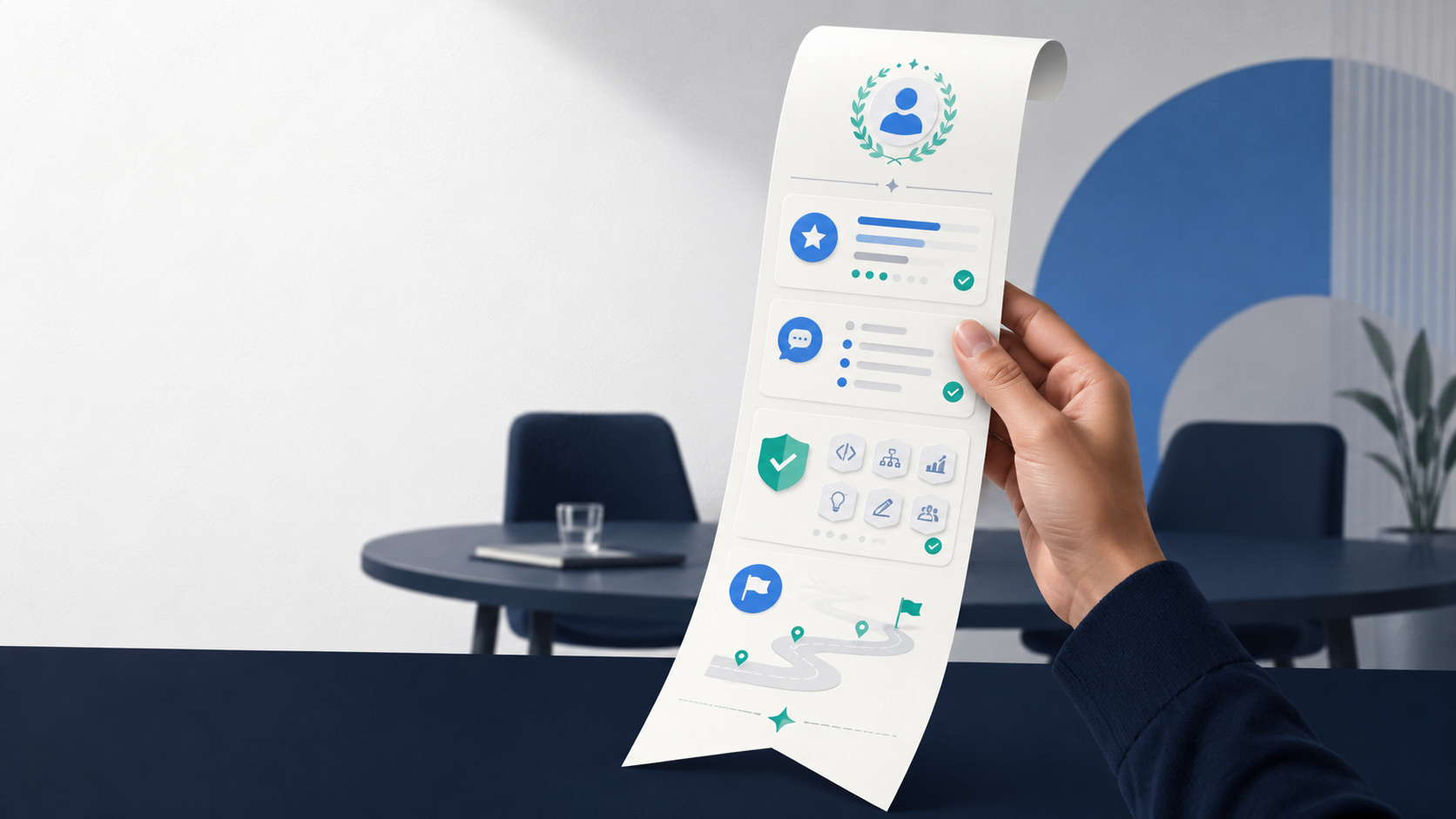
Candidates give more than they receive
A candidate spends hours preparing. They research the company. They rehearse answers. They take time off work. They sit through a 60-minute interview where they give everything they have.
Then they get a one-line rejection. Or silence. No feedback. No explanation. No idea what to do differently next time.
The recruiter is not cruel. They are overloaded. But there is a deeper structural problem.
The person who rejects you cannot easily coach you
A recruiter who just rejected a candidate is in the worst possible position to write developmental feedback.
The decision is already made. Any specific criticism now feels different. "Your system design answer lacked depth" might be useful coaching before the next interview. After "we decided not to move forward", it can feel like twisting the knife.
So recruiters protect the candidate by saying less. They write nothing. Or they write something so generic it cannot hurt anyone because it cannot help anyone either: "We decided to proceed with other candidates whose experience more closely matched our requirements."
This is not laziness. It is a role conflict. The person making the rejection decision cannot also be expected to deliver fully honest, kind, developmental coaching. The roles collide.
AI Coach separates coaching from the decision
We built AI Coach around one principle: candidate development should be separate from the hiring decision.
AI Coach runs only when both sides opt in. It reads the analyzed interview and writes a private coaching email to the candidate. The recruiter does not see the content. The candidate receives strengths, areas to improve, and practical advice for next time.
The tone is not that of a judge. It is that of a career mentor. Honest, specific, and careful.
This matters because candidates do not need another black box telling them they failed. They need something useful to carry into the next conversation.
AI Coach is live today. Candidates already receive real coaching after real interviews.
But coaching is only the first layer.
Hiring teams still need better decisions
This is still software for hiring teams, designed with respect for candidates. The hiring team still needs to choose well.
That is where structured interviews matter. Clear criteria. Consistent scoring. Evidence from the transcript. Side-by-side candidate comparison. A matrix that shows why one candidate is stronger on system design, another on communication, another on domain knowledge.
The decision stays with people. AI can score, group, compare, summarize, and surface evidence. But accountability remains human. A hiring manager should not have to reconstruct an interview from memory, and a candidate should not lose because someone remembered the wrong thing.
This is what AI should do in recruitment: reduce noise, preserve evidence, and make human judgment more consistent.
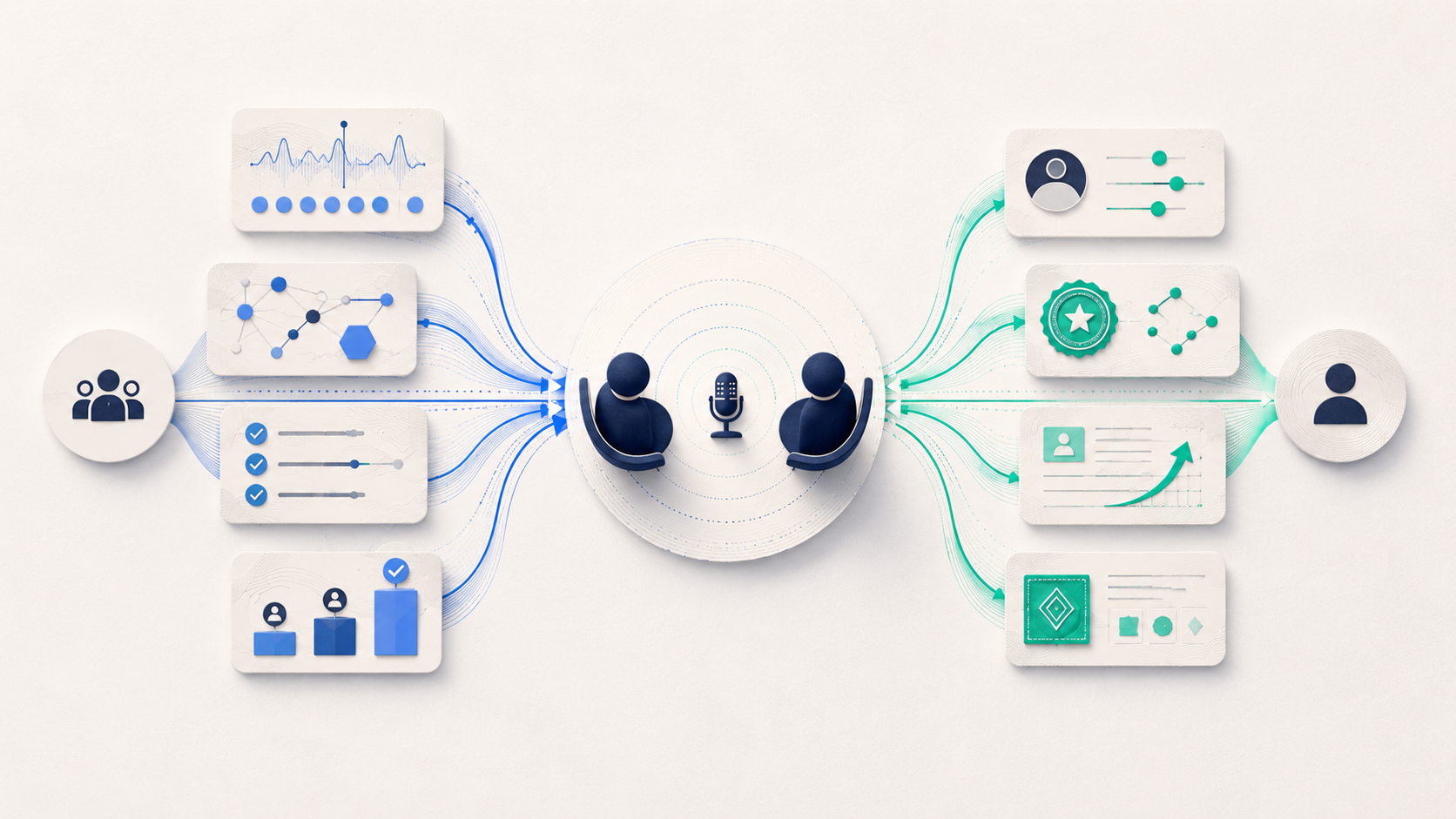
The real opportunity is not automation. It is memory.
Every interview generates signal.
A candidate explains an architecture decision. Solves a problem. Handles a difficult follow-up. Shows how they communicate under pressure. Demonstrates Python, negotiation, leadership, customer empathy, system design, or operational judgment.
Today, almost all of that signal disappears.
It lives in a report for the employer. It may help decide this one role. Then it sits in an ATS until retention rules delete it. The candidate leaves with nothing.
That is the waste.
The next generation of hiring software should not only help companies remember candidates. It should help candidates remember themselves.
Imagine a skill record the candidate can carry
Imagine a candidate finishes a technical interview.
They do not get the job. Another candidate was a better fit. Fair enough.
But during the interview, they showed strong Python skills. The scoring matrix rated Python 8 out of 10, with evidence from the transcript. They also showed strong communication, 8 out of 10. System design was weaker, 6 out of 10.
The company should not share the whole evaluation. It should not share private recruiter notes. It should not share rejection reasoning.
But it could share the positive verified signals the candidate earned.
Python: 8/10. Verified in interview. Shared with candidate.
Communication: 8/10. Verified in interview. Shared with candidate.
System design: not shared, because it was not a strength.
Only positive, candidate-controlled, consent-based evidence. The candidate decides whether to keep it private or use it later.
After five interviews across two years, the candidate has something that does not exist today: a portable portfolio of verified skills. Not self-reported resume claims. Not endorsements from people who never assessed them. Real interview evidence, shared with consent, owned by the candidate.
That changes the power dynamic.
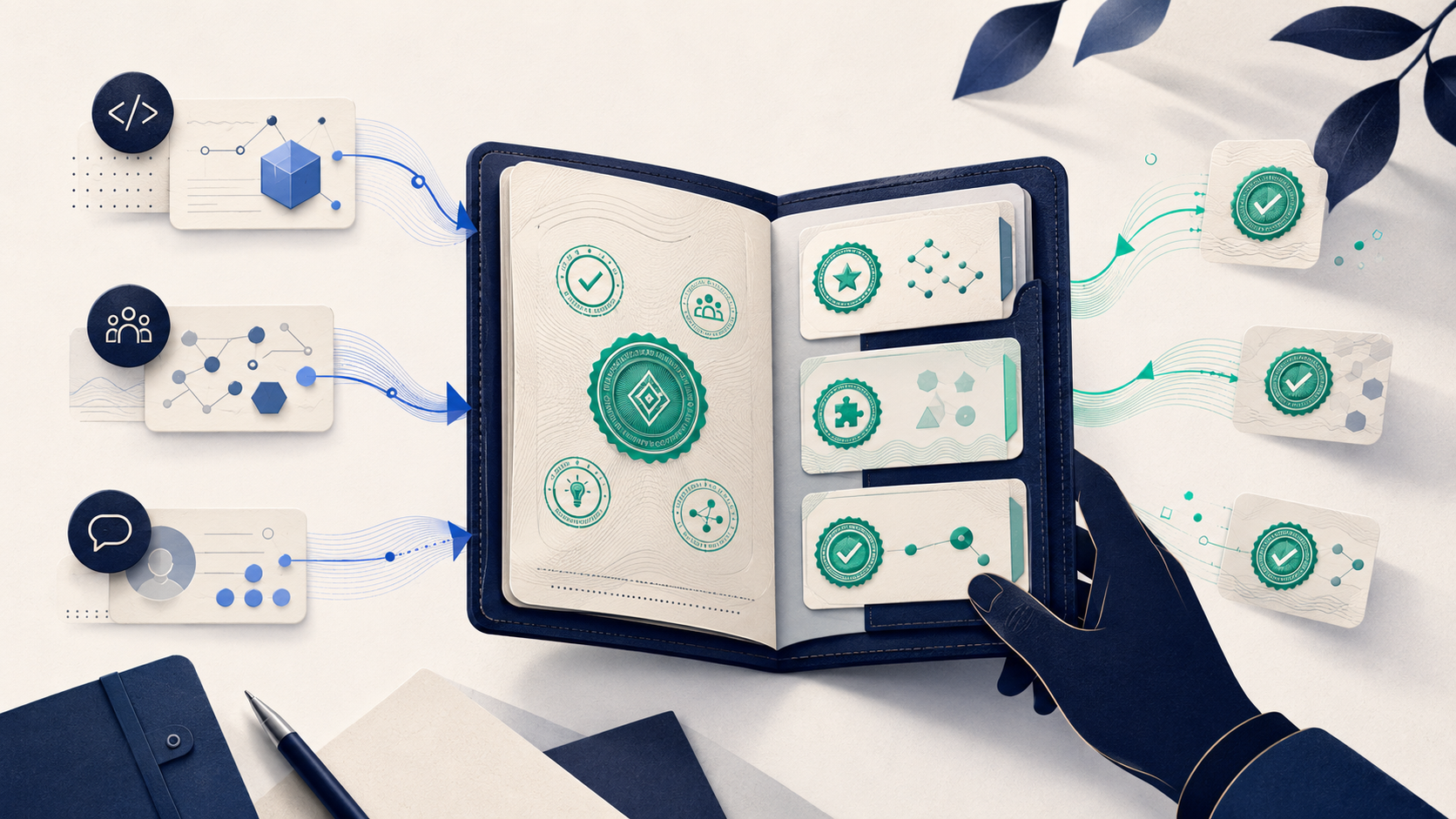
The candidate portal should become a career workspace
This is the bigger vision.
A candidate portal should not be a place where candidates refresh an application status until it says rejected.
It should be a workspace where candidates build from every hiring process they enter.
Feedback history. Every AI Coach email becomes part of a development timeline. The candidate can see patterns across interviews. If three separate interviews point to the same weakness, that is useful. If three separate interviews confirm the same strength, that is even more useful.
CV adaptation. The candidate can bring a job description and ask: how should I present myself for this role? The system can use their interview history, verified strengths, and CV data to help them tailor the application honestly.
Verified strengths. Companies can share positive assessments above a threshold, for example 7 to 10 out of 10, always with candidate control. The candidate builds a portfolio of evidence.
Selective sharing. When applying to a new employer, the candidate can choose what to share. "Python: 8/10, verified in interview." "Customer empathy: 9/10, verified in interview." That is a very different signal from a bullet point that says "strong communicator."
This is not a social network. It is not a public scorecard. It is not a ranking of people.
It is a private career asset that grows when candidates participate in hiring processes.
This is the FOMO for employers
AI in recruitment is coming either way. The only question is what candidates will feel when they meet it.
If they feel screened, scored, and discarded, they will avoid the companies that use it. If they feel heard, understood, and given something valuable, they will remember those companies differently.
This matters most for companies that hire at scale. Every rejected candidate is still a customer, a future applicant, a referral source, or a voice in the market. A company that gives useful feedback to thousands of candidates is not just improving process efficiency. It is building reputation at scale.
The employer brand question will shift from "Did candidates get a response?" to "Did candidates get value?"
That is the standard we think is coming.
What is live now, what comes next
We are not pretending the full vision is already built. It is not. Here is the honest map.
Live now:
- AI-powered interview analysis with structured scoring and transcript evidence
- Side-by-side candidate comparison with scoring matrix
- AI Coach: private candidate coaching, separate from the hiring decision
- 24 EU languages, GDPR compliant, EU AI Act compliant from day one
- Desktop app and web portal with full feature parity
Coming this year:
- Candidate portal for applications and feedback history
- AI-assisted CV tailoring matched to specific job requirements
- Built-in video interviews in the browser
- Browser extension for Teams, Zoom, and Meet
The bigger vision:
- Positive verified skill assessments shared with candidates
- Candidate-controlled skill portfolio
- Selective sharing with future employers
- A hiring platform where both sides leave with value
The bet
Most HR technology was built to help employers choose.
The next generation will also help candidates grow.
That is not charity. It is the future of talent acquisition. The best candidates will notice which companies treat their time as disposable and which companies give something back.
Every interview should leave a trace of value. For the employer, a better decision. For the candidate, better feedback, better self-knowledge, and eventually a stronger portfolio.
Even when they do not get the job.
Especially when they do not get the job.
That is what we are building.