
Yes, if we let it.
That is the uncomfortable answer.
The world without AI in hiring is no longer one of the options.
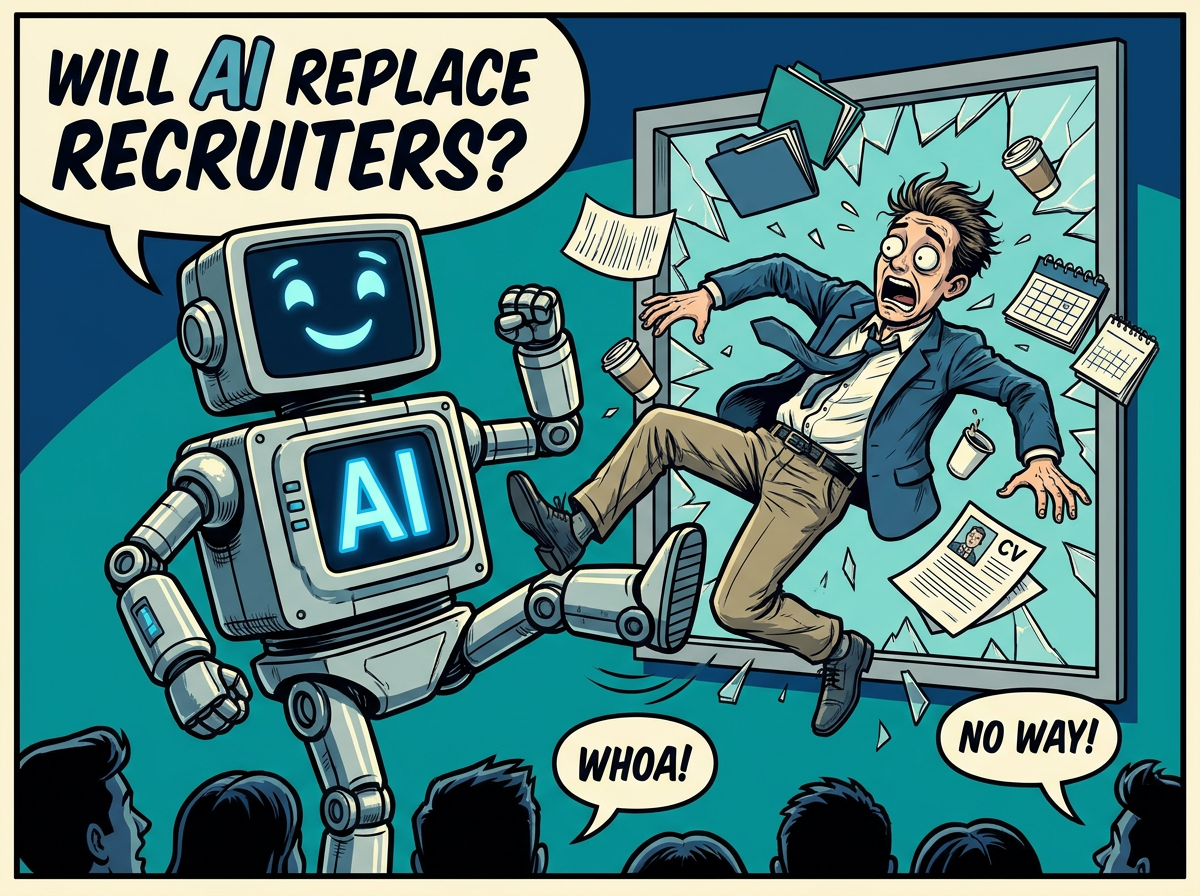
AI is already in the process. Candidates use it to write CVs, tailor applications, prepare answers, and sound more relevant to the role. Employers use it to scan CVs, rank candidates, summarize profiles, write messages, and structure decisions. Forbes recently described recruitment as a strange game in which AI may review CVs that were themselves created with AI. That is not the future. That is already happening.
At first, using AI to write a CV gave candidates an advantage. If only a small group used it well, they could match keywords better, look more structured, and move higher in the pile. But every advantage becomes less valuable once everyone has it.
When most candidates use AI to tailor their CVs, nobody is exceptional because their CV is well tailored. They are simply part of a better optimized mass.
That creates a new problem for recruiters.
If every CV looks relevant, how do you choose? If every candidate knows how to mirror the job description, where is the signal? If AI helps candidates prepare polished answers, how do you separate depth from performance?
One answer is more human work. More checking. More interviews. More follow-up questions. More careful comparison. More time spent understanding what is real.
Another answer is more AI.
AI screens the CV. AI runs the first interview. AI summarizes the interview. AI ranks the candidate. The candidate, of course, may also have AI on their side: preparing answers, monitoring the conversation, suggesting what to say next.
At that point, recruitment starts to look less like a meeting between people and more like a negotiation between systems.
That Is The Crossroads
One path uses AI to replace the human moment. It is efficient, seductive, and easy to sell. Fewer calls. Faster screening. More candidates processed. Less recruiter time per person. It will be especially tempting in high-volume hiring, where the pressure is real and the old process is already broken.
The other path uses AI to make the human moment better.
That distinction matters.
AI can help a recruiter prepare for an interview. It can capture what was actually said. It can suggest better follow-up questions. It can structure the evidence after the call. It can compare candidates against the same role criteria. It can help create useful feedback for the candidate instead of letting the process end in silence.
None of that requires AI to become the recruiter.
It requires AI to do what software should do: remove the work that makes people worse at being human.
Because a lot of recruiting work today is not deeply human. It is manual. It is scattered notes, calendar messages, half-remembered answers, vague debriefs, and chasing hiring managers for feedback. That work is exhausting, and automation will come for it.
The important question is what happens next.
If we use AI only to make hiring faster, we may get a colder version of a process that was already too cold. Candidates will apply with AI-generated CVs, be screened by AI systems, interviewed by AI agents, and rejected by automated messages. Everyone will call it efficiency. Very few people will call it trust.
But if we use AI to support recruiters, the outcome can be different.
Recruiters can spend less time reconstructing conversations from memory and more time judging the quality of evidence. Hiring managers can compare candidates with a clearer record. Candidates can receive feedback that is specific, developmental, and separate from the hiring decision. The process can become faster without becoming less human.
That is the line.
AI replacing recruiters is one possible future.
AI helping recruiters and candidates is another.
The second future will not happen automatically. The market will not choose it out of politeness. Companies will choose the cheaper path unless someone insists on a better one.
AI will replace recruiters if we design hiring around replacement.
But it does not have to.
We can design AI in hiring around people: human-led, evidence-based, respectful to candidates, and clear about where the final decision belongs.
The question is not whether AI enters recruitment.
It already has.
The question is whether we use it to remove people from hiring, or to help people hire better.
References
- Forbes Women: Rewolucja AI w rekrutacji to fascynujaca, choc niepokojaca gra. Used for the article's central market tension: AI-generated candidate materials increasingly meet AI-assisted employer screening.
- BCG: AI Will Reshape More Jobs Than It Replaces. Used for the wider labor-market framing: AI changes work by pulling roles apart into automatable and judgment-heavy tasks.
- Manatal: AI Interviewer. Used as an example of the market direction toward automated screening interviews and AI-led candidate evaluation workflows.
- Manatal: Manatal AI. Used as an example of AI features around candidate parsing, recommendations, summaries, and recruitment workflow automation.
- European Commission AI Act Service Desk: Annex III. Used for the regulatory context: AI systems used for recruitment, filtering applications, and evaluating candidates are listed as high-risk use cases under the EU AI Act.